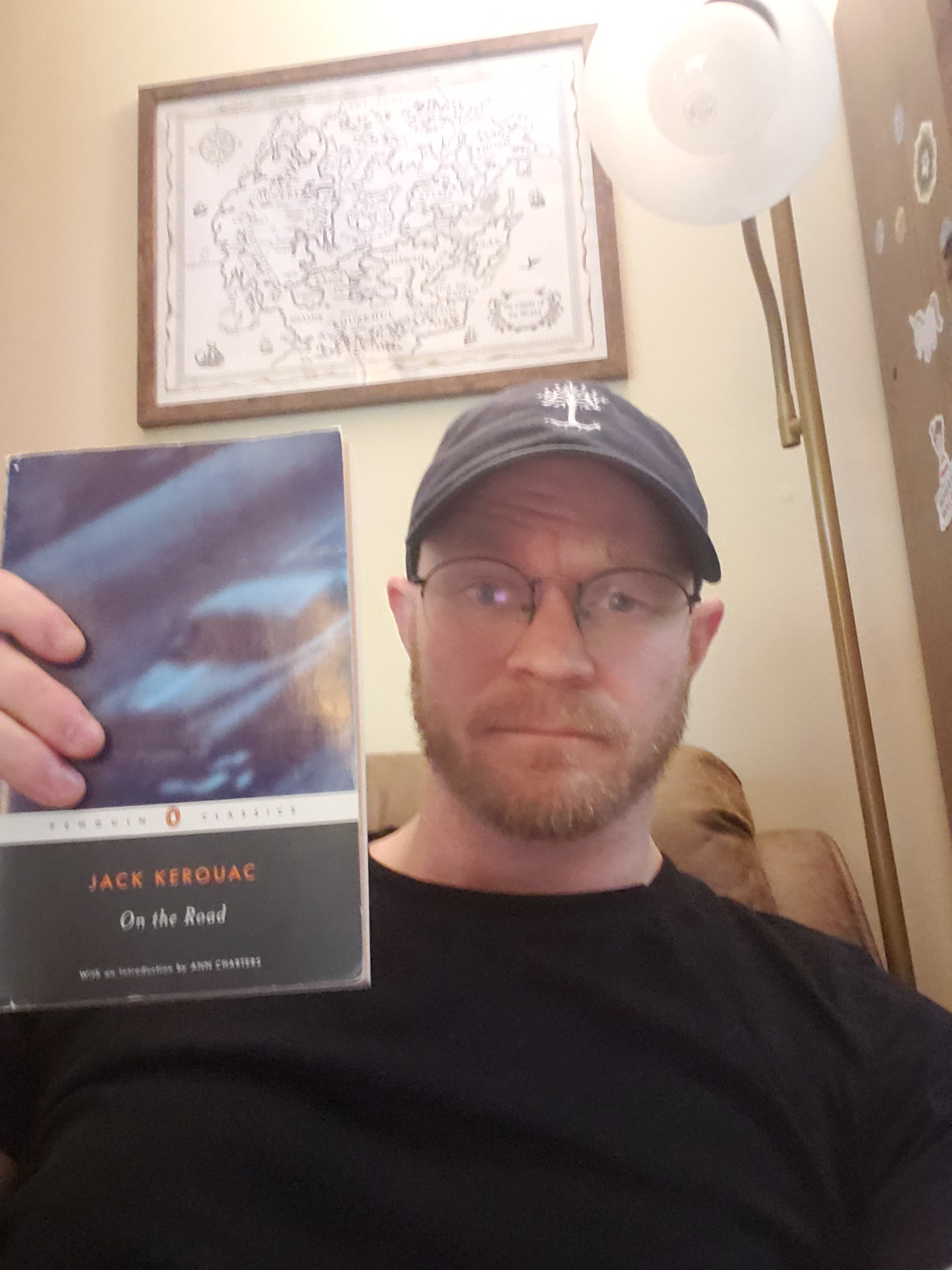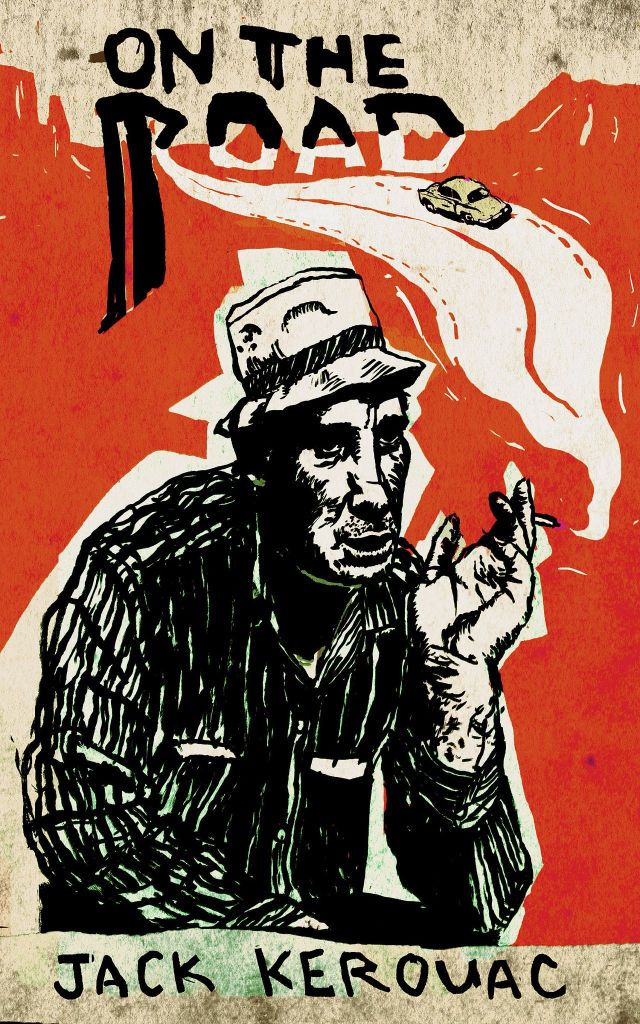
I’m not one for the more extreme forms of literary experimentation. I can admire the slippery, labyrinthian grit of China Miéville; the dense specificity of James Joyce; the deep POV immersion of William Faulkner. But in general, I gravitate to clarity and solid workmanship over fiction that pursues art before story. Give me Steinbeck, Frank McCourt, or Ursula K. Le Guin. I’m not saying they’re superior writers; I’m just saying I prefer a straightforward style laden with just as much complexity as the experimental stuff.
Kerouac falls somewhere in the middle of the experimentation vs. workmanship spectrum, if that’s even a valid dichotomy to draw. This post is going to be less about the content of On the Road, less about event or plot, and more about literary style.
What strikes me most about Kerouac’s style is how he eschews the specificity of language that’s usually the hallmark of anything deemed “literary.” He piles repetition and vagueness all together, detesting the ordered precision of Hemmingway or the ornamentation of Fitzgerald. He seems not to care so much about the actual words, just so long as they communicate mood and movement.
There’s obviously something to be said for this, because the emotions couldn’t be clearer. You understand the crazed, nonsensical, drug-addled spiritualism and faux-revelations of the characters’ minds, even when the things they’re saying to the reader and to each other make no sense whatsoever. All the precision in the world couldn’t communicate these vibes as effectively as this jumble of sensations and images do.
Which is not to say that Kerouac’s style doesn’t include specificity. It does, just not of language. The scenes he paints are incredibly well observed. They bring a huge number of characters, from shambling hobos to Mexican hookers to Okie alcoholics, into vivid reality, complex and fully formed. And he makes it look easy, which is never easy to do.
If Hemingway’s writing style is a tidy shelf displaying objects carefully chosen and placed at precisely measured distances from each other, in an order painstakingly arranged to communicate maximum significance; and Steinbeck’s style is something like a wicker picnic basket into which he’s delicately placed everything he cares about, everything he wants to communicate, everything that matters; then Kerouac’s is a battered old sea chest into which a madman-adventurer has haphazardly piled the detritus of his life, grabbing objects at random as he packed for a long voyage. I imagine he’s the sort of traveler who might have absentmindedly stuffed in every useless bauble from his mantlepiece, commemorative shot glasses and plastic troll dolls, while forgetting to pack a single pair of socks. Yet he never worries about the lack, and somehow makes do.
All this makes me sound a bit admiring of him. Which, honestly, I’m not sure is accurate. The thing I admire most is how, while idealizing the frenetic freedom of himself and his fellow beats, he’s brutally honest with showing the harmful effects of their lifestyle. Divorces, addictions, abandoned children, financial and physical ruin. But to Kerouac and his friends, these are all prices worth paying (note: I say Kerouac rather than Sal, because I understand his books are essentially autobiographical).
The thing I admire least about Kerouac is the combination of naivety and cynicism, even though it is, no doubt, both intentional and honest. The beats are the counterculture of their day. Disparaging of the establishment, of family, of responsibility, of structure. The men leave a trail of brokenness behind them, and usually it’s the women, no matter how free-spirited they’d like to be, who must pick up the pieces.
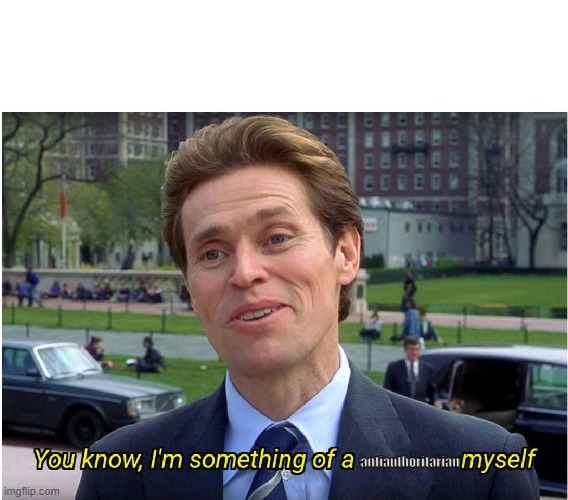
I’m something of an antiauthoritarian myself (this to be read in Norman Osborn’s voice, please), but there’s nothing prescient or wise about the cynicism of these beats. Hence the naivety I mentioned. They romanticize and ultimately infantilize anyone with a different cultural background, from Black jazz musicians to penniless Mexican peasants, claiming that they, the beats, are laden with troubles unique to white America. They’re the ones who really suffer in this world, with listlessness and despair in their hearts that “simpler souls” will never know.
I think (at least I hope) that there’s self-awareness in Kerouac’s presentation of this worldview. A sense that he knows how absurd his whining is. But that doesn’t excuse it. The mindset reminds me somewhat of the New Atheist movement: an attempt to tear down an edifice without building anything in its place. Difference being, I think, by and large, the New Atheists were well-intentioned, while I doubt the beats had any intentions at all beyond their next fix.
I’m confused by those who speak of the beats and their ilk with wistfulness, even nostalgia. Surely we’re not meant to believe that these folks are worth emulating. Surely On the Road itself acts as an intentional criticism of this passed-away culture, showing us how bankrupt their lives were.
Perhaps I’m sounding like an existentialist here. I don’t mean to. But it genuinely perplexes me. Especially since I know intelligent and talented people who playact their own Instagrammy version of modern beathood.
Give me responsibility, intention, and precision any day over these mad feelings of false freedom they express. After all, Kerouac died in his forties, and, while some would doubtless claim he stuffed far more life into his paltry years than your average Jack, it seems to me that life lived in a drug-addled haze is scarcely life experienced at all.
Moving on . . .
Kerouac’s process, as described by Ann Charters’s forward to the edition I read, is fascinating from a writerly perspective. He wrote the book in three weeks, taping together sheets of typewriter paper end on end so he wouldn’t even have to pause to insert new ones; a necessary process to capture the frenetic, leaping voice of his work.
But that’s not the interesting part.
It’s everything that came before, the years he spent preparing for those three weeks, partially without realizing it, travelling through America, cultivating a community of other far-out artisty types whose lives he could draw from, emulating and discarding other writers’ styles like a literary ragpicker. He attempted to write this novel multiple times, with different iterations of character and conceit.
The stratification of all his ideas into this finished product reminds me of my own current writing project. It’s a sequel to the crusader heist fantasy I wrote that landed me an agent, but I originally intended it as the sequel to a different book. I’ve retooled ideas and characters from several of my novels, combined them with those from others, switched around themes and arcs and motivations, experimented with bringing the book’s Gilgamesh Epic meta-structure forward, then pushing it back so it’s less visible . . .
I guess I’m digressing. Kerouac would be proud.
Point is, that sort of stratification is often where creative and interesting ideas come from. It’s the alchemy between things you never thought would fit together. In Charters’ forward, she credits Kerouac’s literary agent with imposing discipline on the rambling work, forcing him to combine multiple incidents, clarify language, obscure some things, reveal others more explicitly.
Every writer needs that person, but especially writers who think of themselves as mystics, and their works as sacred texts, as Kerouac seems to have done. Just as he was attempting to undermine the established order of things, to profane the world he lived in, so he needed someone who would take his stuff both more and less seriously than he did. Someone who would treat it as craft, not art alone, and who also wasn’t afraid to make changes to the sacred text.
May every writer have such a blasphemous presence in their life.